
What Does DWT Mean When Buying a Ship?
By ShipSales.ai Team · Published 23 October 2026 · Updated 23 October 2026
DWT means deadweight tonnage. It is a useful vessel-size measure, but it does not tell you how much saleable cargo a ship can carry on every voyage.
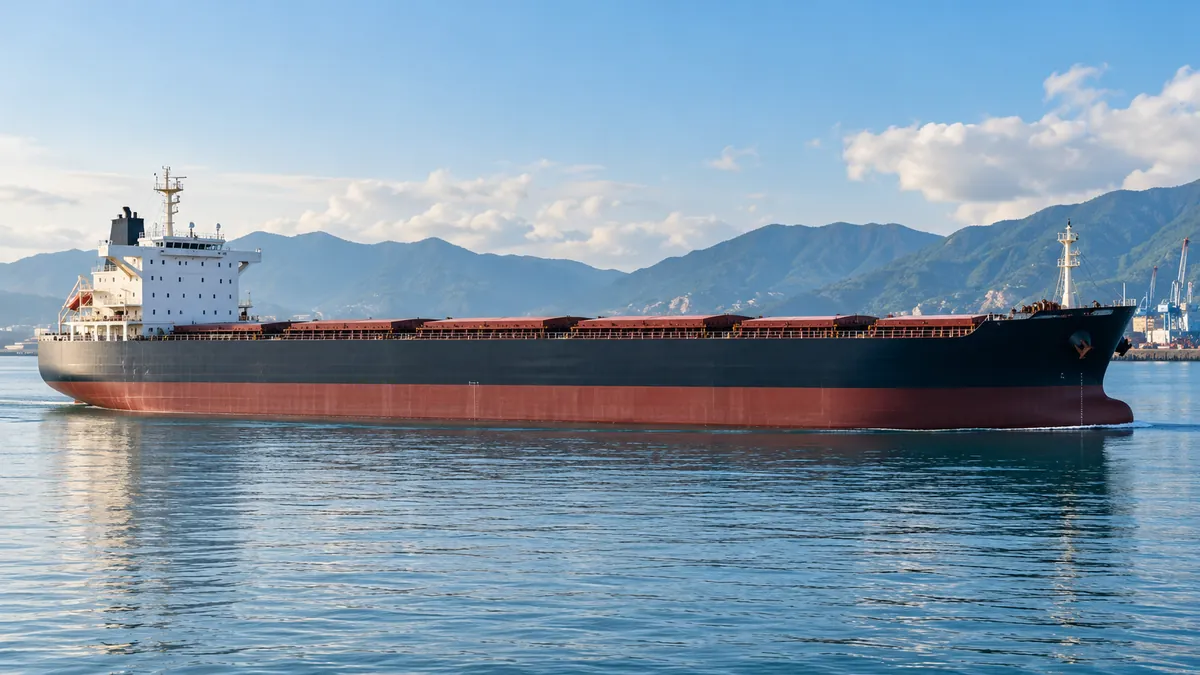
DWT measures carrying weight
Deadweight tonnage describes the difference between a vessel's loaded displacement at a specified loading condition and its lightweight. It is normally expressed in metric tonnes. Deadweight includes more than cargo: fuel, water, stores and other carried weights also use part of the available allowance.
The important purchase question is therefore not simply whether the advertised DWT matches your cargo parcel. You also need to know the loading basis and how much of that allowance is available for the intended voyage.
Why DWT is not the same as cargo payload
Consider a simplified example: a vessel has a stated deadweight of 40,000 metric tonnes. If non-cargo carried weights total 3,000 tonnes at the relevant loading condition, the remaining weight allowance would be 37,000 tonnes before considering other restrictions. These figures are illustrative, not an estimate for a real vessel.
Actual cargo loading also depends on stability, permitted loading, route and port limitations. Obtain a vessel-specific assessment rather than calculating a commercial cargo commitment from the listing alone.
DWT and gross tonnage describe different things
Gross tonnage, often shown as GT, is a measure calculated from enclosed ship volume. It is not a cargo weight in tonnes. The IMO's tonnage convention explains gross tonnage as a function of the moulded volume of enclosed spaces. A GT figure and a DWT figure should not be compared as though they were competing payload estimates.
Displacement describes the vessel's total weight in a particular condition. Lightweight describes the ship without the variable carried loads covered by deadweight. Keep these terms separate when reading specifications.
Cargo volume and draft can become the limiting factors
A light cargo can fill the holds before the available weight allowance is used. Conversely, a vessel may have enough theoretical carrying capacity but face a loading restriction at the intended port. Hold volume, cargo characteristics, dimensions and draft therefore belong beside DWT in a shortlist.
Questions to ask about a listing
- What loading condition and draft support the stated DWT?
- What are the vessel's hold or tank capacities?
- What restrictions affect the intended loading and discharge ports?
- What information is available for the proposed cargo and voyage?
Use the DWT filters on ShipSales.ai to narrow a search, then confirm the detailed particulars before making a buying decision. A filter is a shortlisting tool, not confirmation of voyage suitability.